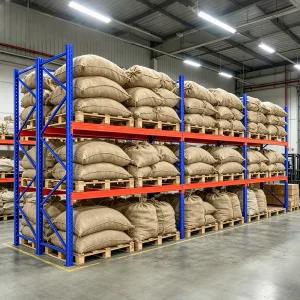
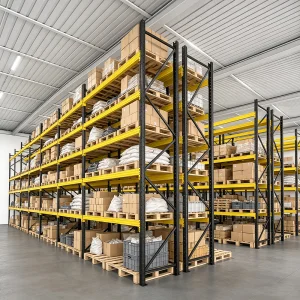
Engineered for dynamic loads, high scalability, and seamless integration into automated distribution networks.
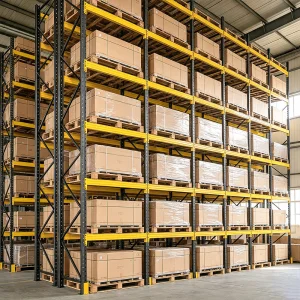


The contemporary global supply chain relies heavily on high-integrity material handling interfaces. Stacking and transport racks, once viewed as passive storage assets, have emerged as crucial elements in intermodal logistics optimization. Across North America, Western Europe, and highly industrialized corridors of Asia-Pacific, organizations are replacing wooden and non-standardized structures with structural steel transport systems. This transition is motivated by a focus on structural load security, minimizing product loss during intermodal transit, and integration with automated distribution networks.
Modern transport racking must withstand multi-directional kinetic stresses. Unlike static warehouse racks, dynamic transport systems experience acceleration, vibration, and deceleration forces (ranging from 0.5g to over 2g during heavy braking or rail shunting). Implementing structural engineering standards is necessary. The manufacturing landscape relies on precise mechanical tolerances to prevent structural fatigue under repetitive load distributions.
High-performance material handling systems require certification under global standard frameworks. Our manufacturing processes align with ANSI MH16.1 (Specification for the Design, Testing, and Utilization of Industrial Steel Storage Racks), EN 15512 (European Standard for Steel Static Storage Systems), and AS 4084 (Australian Standard for Steel Storage Racks), ensuring dynamic and static safety compliance across international borders.
Additionally, the transition toward sustainability and circular supply chains has driven global demand for durable, recyclable steel racks. Multinational corporations are moving away from single-use crating toward returnable steel racking loops. These custom steel transport fixtures are engineered for hundreds of logistics cycles, offering significant cost-per-trip savings and supporting ESG initiatives.
A premier Chinese manufacturing enterprise specialized in engineering, quality control, and global delivery of advanced logistics solutions.
Established in 2015, Shenzhen Kimsuk Storage Equipment Manufacturing Co., Ltd. is a leading industrial warehouse storage systems manufacturer headquartered in Shenzhen, China. Operating from a modern 38,000 m² production facility, we specialize in high-density pallet racking, mezzanine systems, and customized logistics storage solutions for global enterprises.
With over 11 years of deep industry expertise and 8 years of direct international trade experience, Kimsuk generates over $22 million in annual export sales. Our primary overseas markets cover North America, Western Europe, Southeast Asia, and the Middle East, serving heavy-duty distributors, logistics hubs, e-commerce fulfillment centers, and industrial manufacturing plants.
Quality and safety are core to our manufacturing philosophy. Backed by 35 dedicated full-time QC specialists, we execute rigorous quality control protocols across all production phases—including spectral raw material testing, ultrasonic weld inspection, dynamic load capacity testing, and automated powder-coating durability checks.
Driven by strong innovation, our internal R&D team consists of 18 experienced structural engineers. Last year alone, we successfully launched 45 new optimized racking designs. We offer extensive OEM/ODM customization options, including tailored load capacities, specific column profiles, seismic-resistant structures, and custom anti-corrosion surface treatments. Supported by an integrated network of over 850 reliable supply chain partners, Shenzhen Kimsuk delivers high-performance, cost-effective warehouse storage systems engineered to maximize your space utilization.
Inside our 38,000 m² manufacturing plant: advanced automated machinery executing precise metal forming, structural welding, and finishing operations.
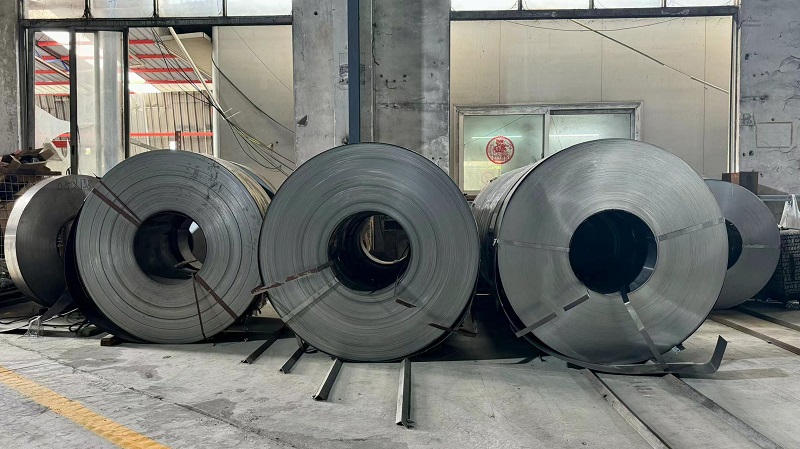
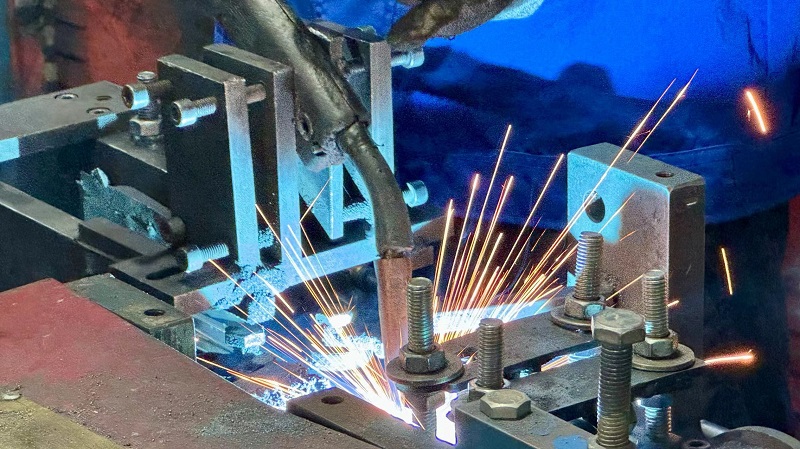
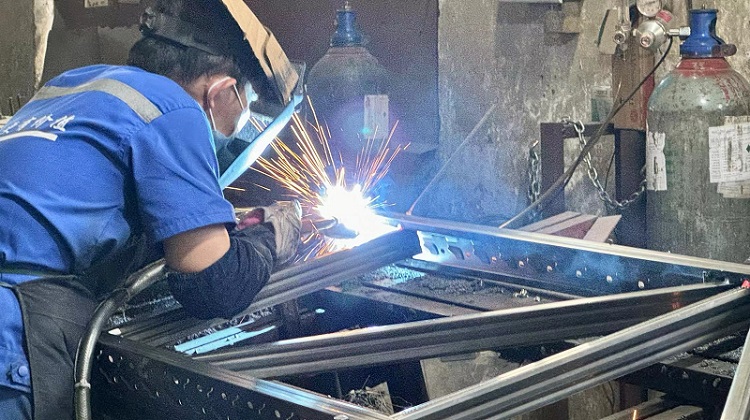
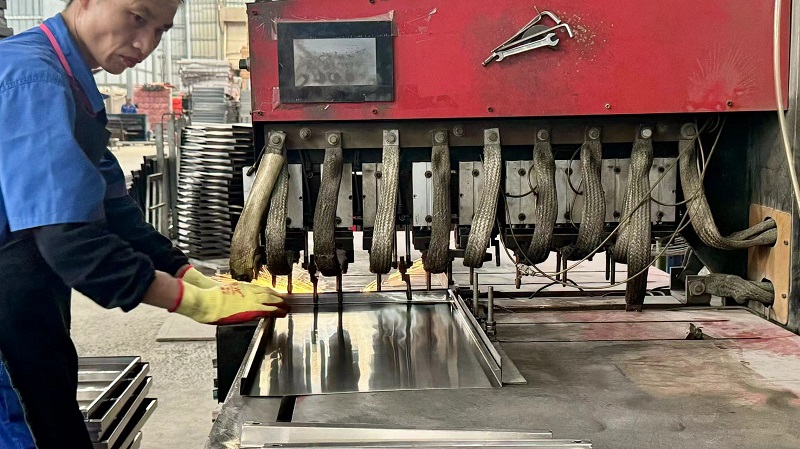
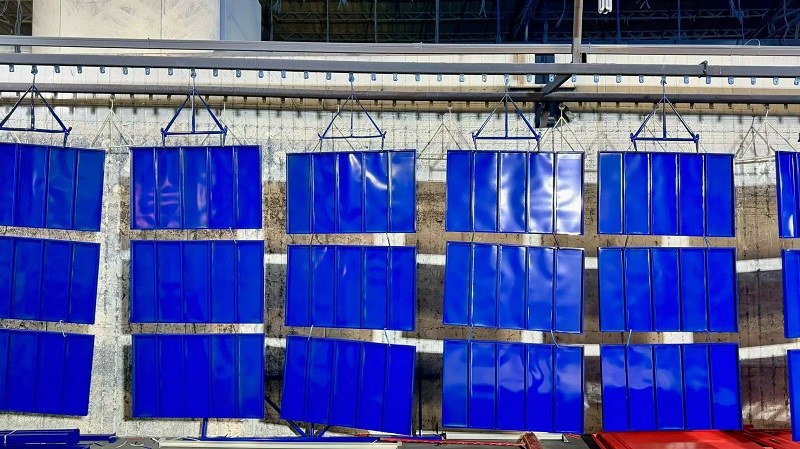
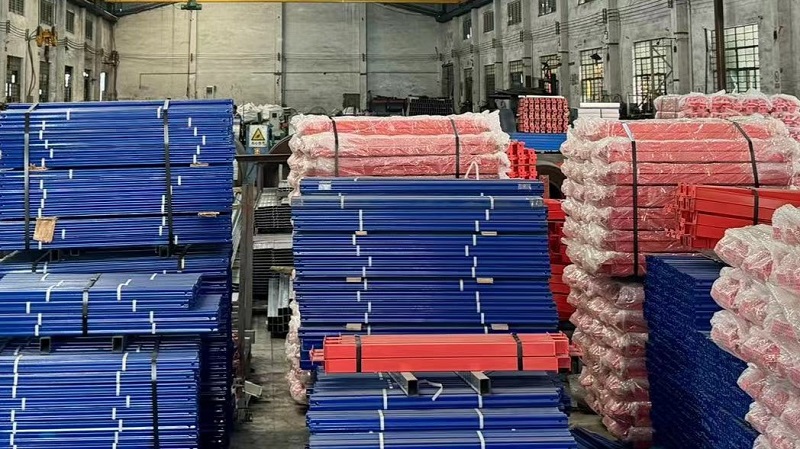
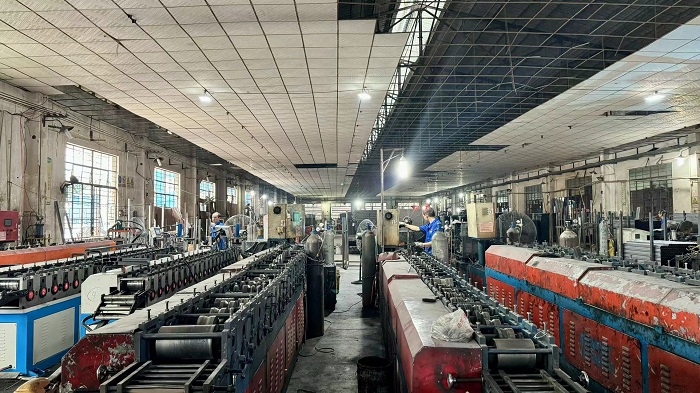
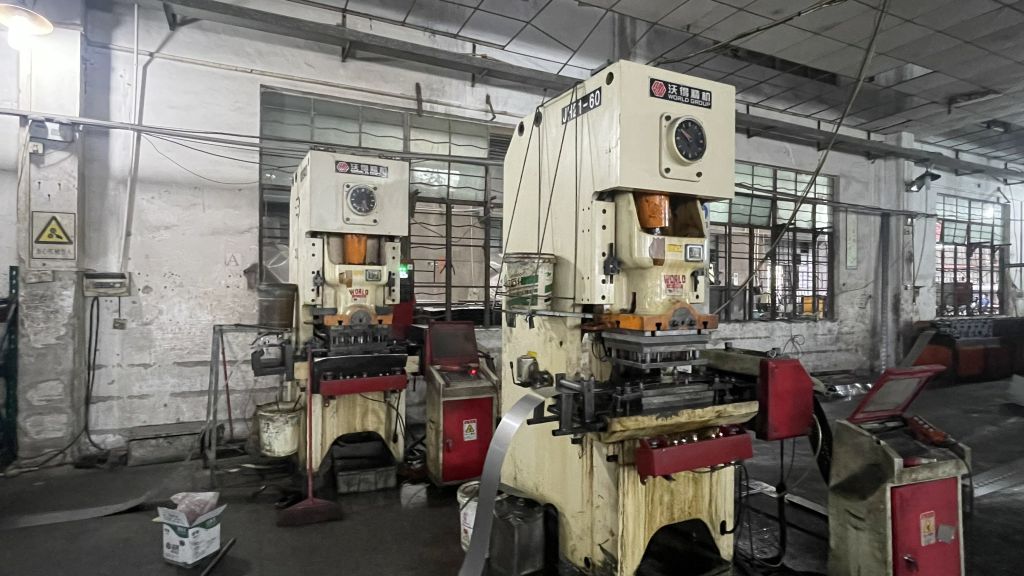
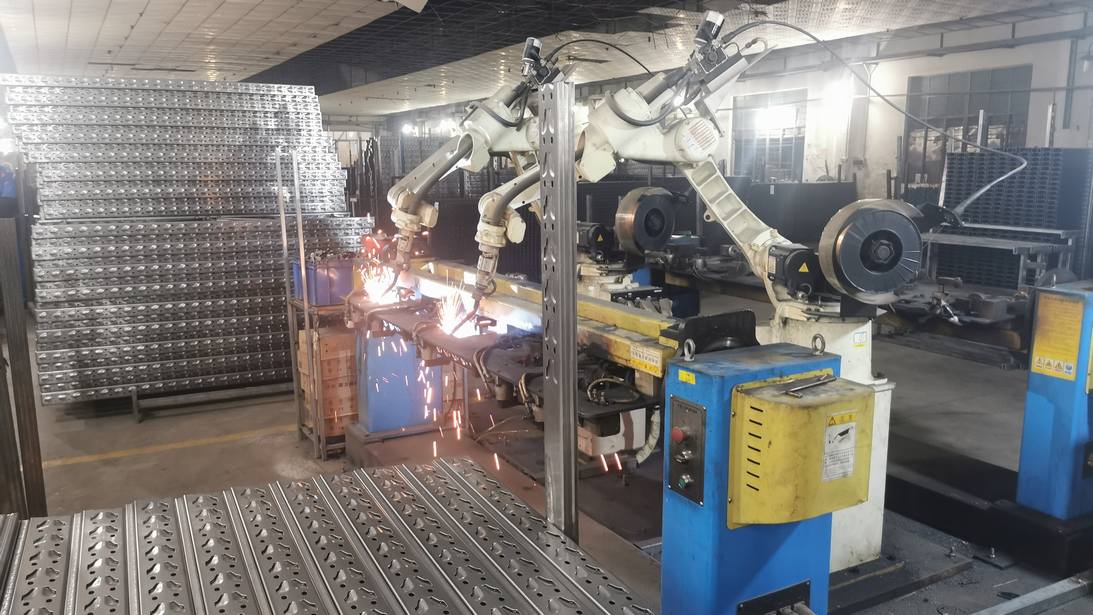
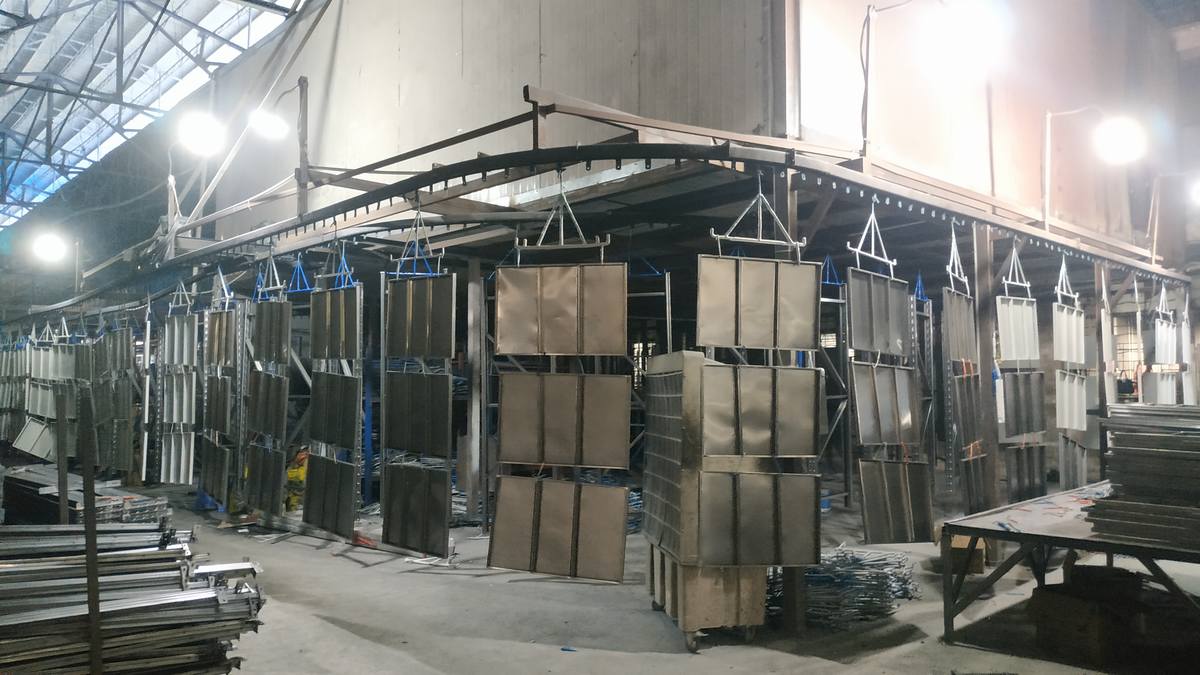
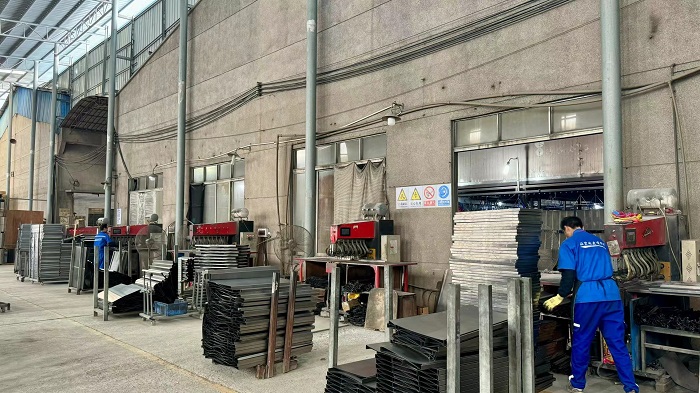
Every batch undergoes strict structural validation, weld testing, coating checks, and dimension controls before packing.
China's dominance in industrial racking and logistics storage systems is built on integrated industrial clusters, advanced metallurgy, and deep manufacturing expertise. The Pearl River Delta, where Shenzhen Kimsuk is strategically located, provides an efficient industrial ecosystem. This geographical positioning allows us to source certified structural steels (specifically high-yield Q235B and Q355B carbon steel) directly from Tier-1 domestic mills, reducing internal supply chain costs and ensuring consistent material quality.
In addition to raw material cost structures, the technological sophistication of Chinese factories supports global competitiveness. High automation levels, including multi-axis robotic welders, continuous roll-forming systems, and laser-guided CNC punching machines, ensure high dimensional accuracy across thousands of product lines. This level of precision is critical for high-bay warehouse configurations and automated storage and retrieval systems (AS/RS), where dimensional variances of even a few millimeters can lead to system disruptions.
Furthermore, China’s logistics infrastructure enables reliable global distribution. Direct proximity to global container ports like Shenzhen and Guangzhou reduces transport lead times. Integrated supply chains allow for rapid prototype development—transitioning from conceptual CAD models and Finite Element Analysis (FEA) to production-ready structural physical samples in days rather than weeks.
How leading enterprises customize and deploy Shenzhen Kimsuk systems to solve high-density storage and intermodal transport challenges.
Engineered for intermodal returnable container loops, our custom racks carry heavy engines, transmission blocks, and body panels without damage or structural deformation under transport vibration.
Specialized steel A-frames and modular glass transport racks feature integrated neoprene protection, secure tie-down systems, and vibration-dampening bases to safely move fragile and heavy loads.
Our high-density pallet and shuttle racking configurations utilize hot-dip galvanized steel to withstand temperatures as low as -30°C without compromising structural integrity or brittle fracture resistance.
Our 18 structural R&D engineers design racking systems using advanced CAD and Finite Element Analysis (FEA) software. Structural steel racking must be engineered to withstand specific regional challenges, particularly seismic activity. Racking installations in seismic zones, such as areas along the Pacific Rim or parts of Europe, require custom configurations to protect personnel, inventory, and building integrity.
We analyze dynamic seismic loads using response spectrum analysis, tailoring baseplates, upright column dimensions, and frame bracing designs to comply with local seismic codes. These designs utilize structural steels like Q355B, which provides high yield and tensile strength, allowing for slender structural profiles that support heavy loads while maintaining flexibility to absorb seismic energy without collapse.
Every custom rack profile is subjected to rigorous digital simulation. Our team tests structural performance under various load cases, including vertical live/dead loads, horizontal impact forces, and seismic accelerations. This virtual validation ensures reliability before mass manufacturing begins.
Surface treatments are also critical for long-term reliability. We operate automated electrostatic powder coating lines that apply highly durable, thermosetting epoxy-polyester coatings. This finish provides resistance against chemical exposure, physical impacts, and humidity. For harsh environments, we offer hot-dip galvanizing, which provides sacrificial zinc protection that prevents oxidation and rust in both indoor and outdoor applications.
Procuring industrial racking from overseas requires evaluating several factors beyond initial purchase price. To achieve low total cost of ownership (TCO) and long operational lifetimes, procurement teams should prioritize the following criteria:
Answers to common structural engineering, logistics, and procurement questions regarding industrial racking.
High-strength structures designed for manufacturing plants, heavy logistics centers, and large-scale industrial warehouses.
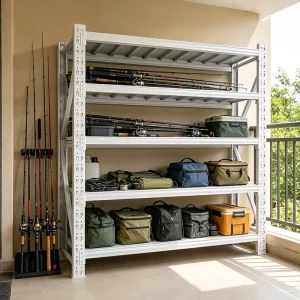


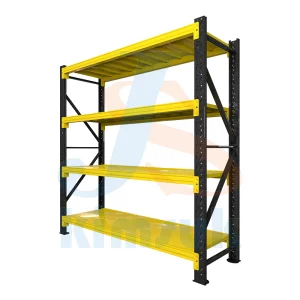
 Kimsuk Rack