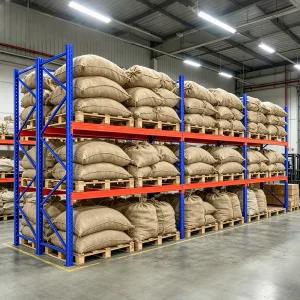
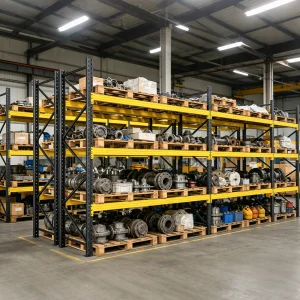
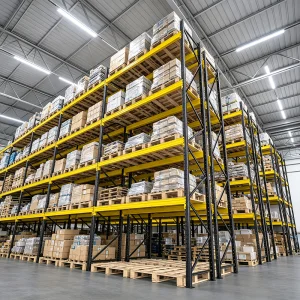
Engineered to optimize industrial workspace footprint, increase pallet storage densities, and withstand extreme loading conditions.
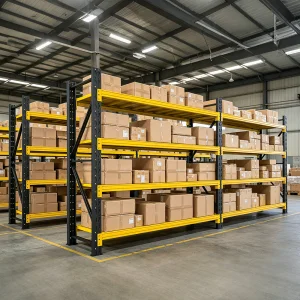

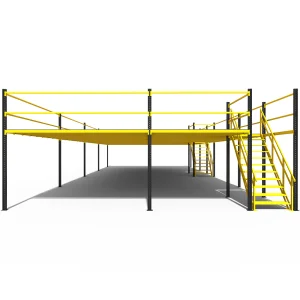

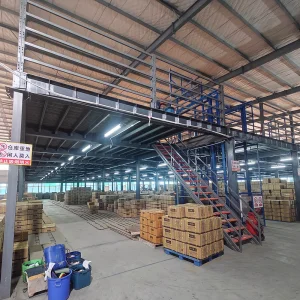
Industrial storage is no longer merely about static load-holding. In the modern era of logistics, warehousing systems have transformed into dynamic, structural elements designed to integrate with automated guided vehicles (AGVs), AS/RS systems, and high-velocity workflow routing. A workstation rack serves as the physical backbone of these processes, demanding exceptional stability, modular reconfiguration capabilities, and compliance with stringent international safety codes.
The global shift toward supply chain localization, combined with the rapid expansion of cross-border e-commerce, has pressured procurement directors to source racking structures that offer more than basic structural performance. There is an increasing demand for specialized profiles, including high-tolerance cold-rolled upright beams, custom seismic-certified connections, and corrosion-resistant powder coatings that endure severe thermal variations within cold chain networks.
"According to logistics integration studies, switching to multi-level high-density mezzanine floor layouts and heavy-duty structural steel platforms yields up to a 65% increase in spatial utilization, directly improving the bottom line of third-party logistics (3PL) providers."
Understanding steel chemistry and stress-distribution mechanics is vital. Premium Chinese manufacturers leverage high-tensile Q235B and Q355 structural steel grades. These materials are cold-rolled via CNC machinery into sophisticated configurations (such as standard teardrop profiles or box-beam patterns) to ensure minimal deflection and high mechanical resistance under asymmetric loading cycles.
How enterprise buyers are standardizing their physical infrastructure to support safety, durability, and warehouse automation.
Global warehouse projects in Western Europe, the US, and Australasia require strict verification of structural calculations. Systems must comply with AS4084-2012, RMI, and FEM 10.2.02 codes. Calculations must model dynamic earthquakes, floor settlement, and live load distributions accurately.
Instead of seeking new land, industrial firms leverage multi-tiered structural steel mezzanine floor racks. Custom mezzanine layouts expand picking surfaces vertically, supporting e-commerce micro-fulfillment centers directly above logistics cross-docking areas.
Workstation racking must integrate with material handling systems (MHS). Flatness and vertical tolerances must match standard automated robotic operations. In automated warehouses, even a minor deflection can trigger system shutdowns.
Leveraging industrial automation, vertical steel supply chain integration, and precision quality testing protocols.
The production of industrial-grade workstation and storage racks requires substantial metal processing capabilities. China's advanced industrial hubs, particularly the Guangdong-Hong Kong-Macao Greater Bay Area, provide access to key inputs, including major state-owned steel mills, automated tooling suppliers, and global shipping ports.
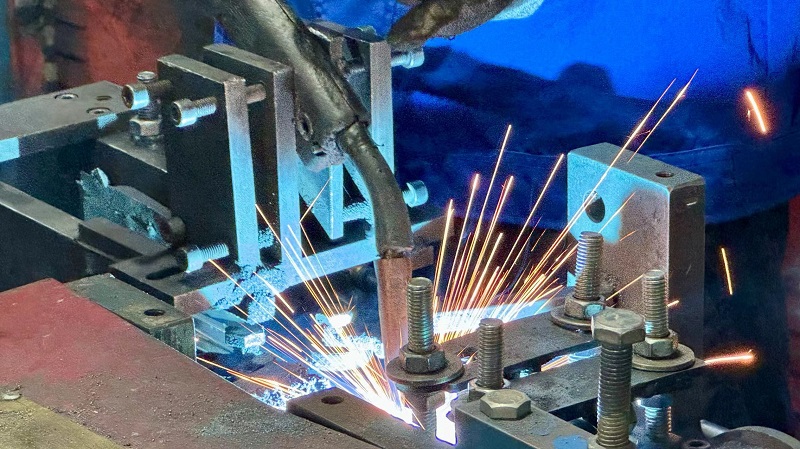
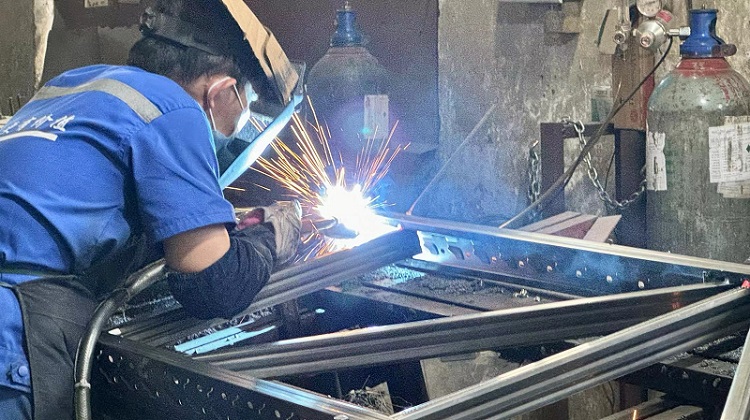
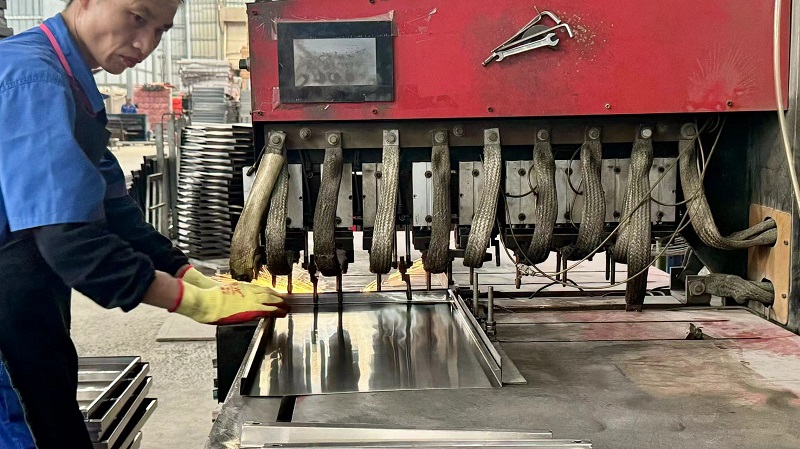
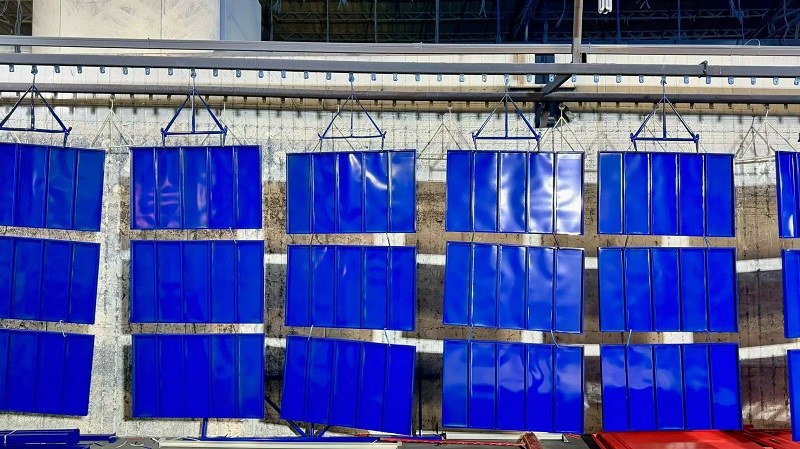
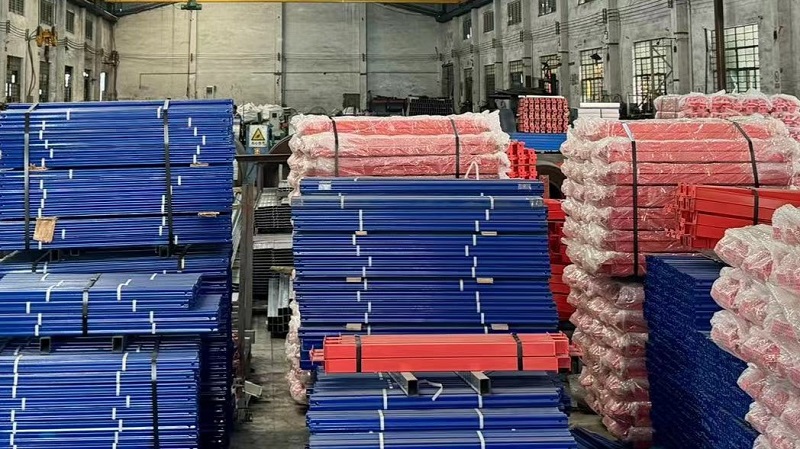
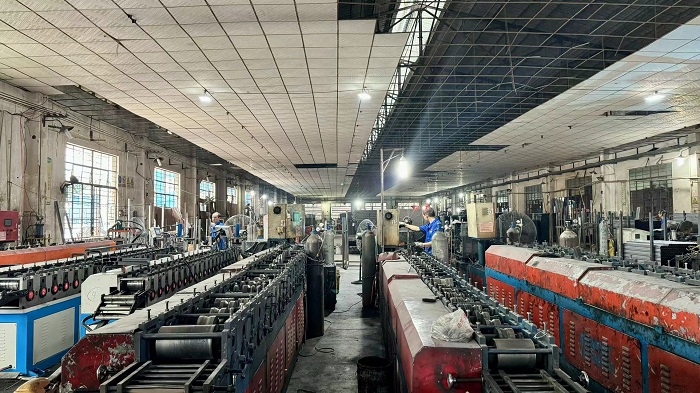
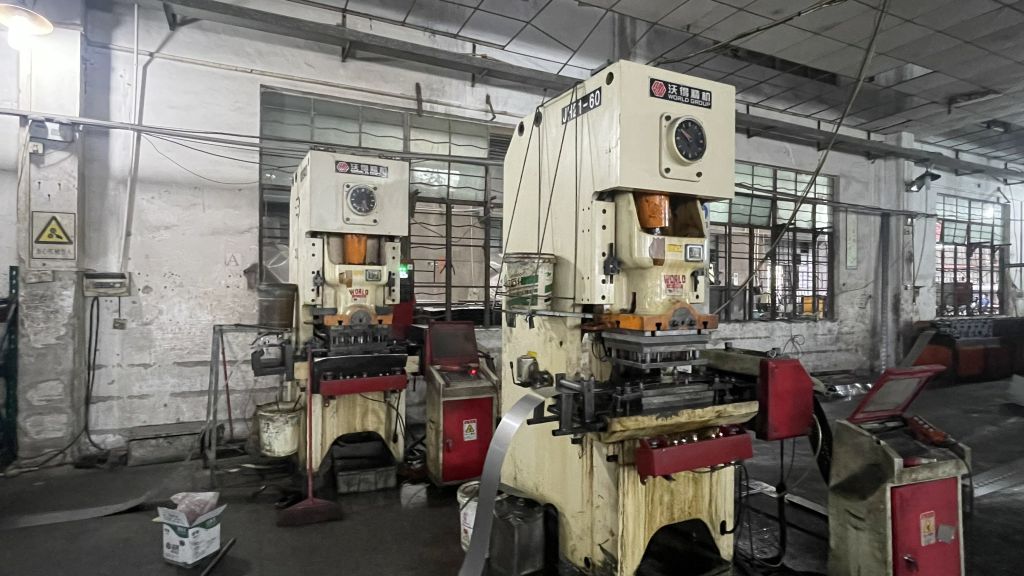
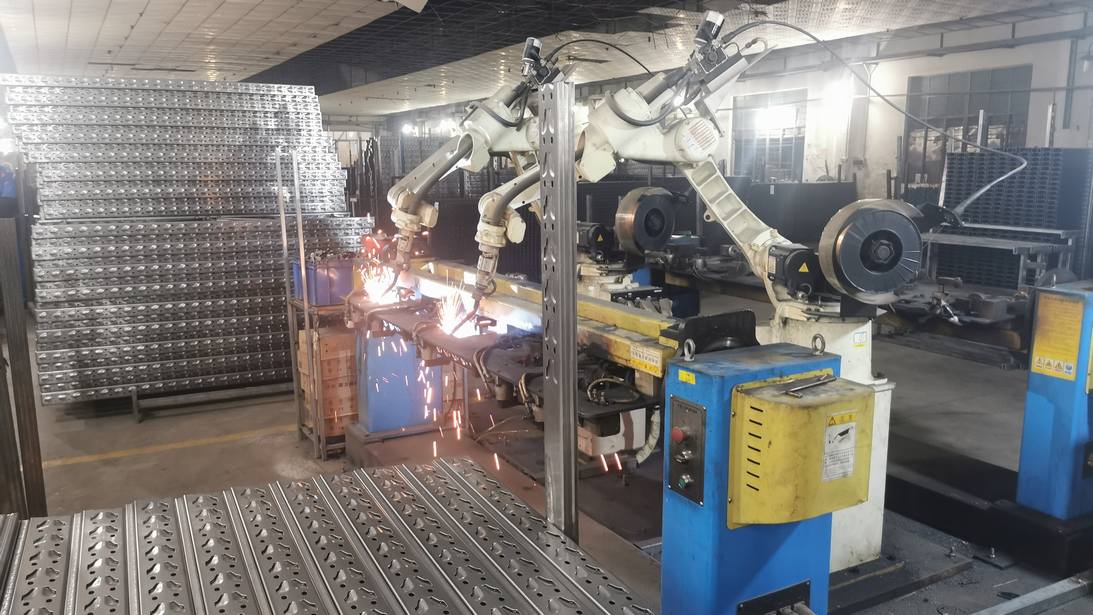
By integrating Industry 4.0 technologies, modern production facilities utilize automated robotic welding stations, continuous CNC punch lines, and electrostatic powder coating systems. Automated welding helps prevent structural micro-fractures in high-stress zones. CNC roll-forming ensures consistent profile dimensions across long production runs, which is crucial for high-bay racks where tolerances are measured in millimeters.
Vertical supply integration helps buffer against global price fluctuations. By partnering with nearby steel mills and regional raw materials suppliers, Chinese exporters maintain stable lead times, delivering customized industrial racking systems faster than local fabricators in Western markets.
A global leader in structural racking and high-density industrial storage platforms.
Established in 2015, Shenzhen Kimsuk Storage Equipment Manufacturing Co., Ltd. is a leading industrial warehouse storage systems manufacturer headquartered in Shenzhen, China. Operating from a modern 38,000 m² production facility, we specialize in high-density pallet racking, mezzanine systems, and customized logistics storage solutions for global enterprises.
With over 11 years of deep industry expertise and 8 years of direct international trade experience, Kimsuk generates over $22 million in annual export sales. Our primary overseas markets cover North America, Western Europe, Southeast Asia, and the Middle East, serving heavy-duty distributors, logistics hubs, e-commerce fulfillment centers, and industrial manufacturing plants.
Driven by strong innovation, our internal R&D team consists of 18 experienced structural engineers. Last year alone, we successfully launched 45 new optimized racking designs. We offer extensive OEM/ODM customization options, including tailored load capacities, specific column profiles, seismic-resistant structures, and custom anti-corrosion surface treatments. Supported by an integrated network of over 850 reliable supply chain partners, Shenzhen Kimsuk delivers high-performance, cost-effective warehouse storage systems engineered to maximize your space utilization.
Quality and safety are at the core of our manufacturing philosophy. Backed by 35 dedicated full-time QC specialists, we execute rigorous quality control protocols across all production phases—including spectral raw material testing, ultrasonic weld inspection, dynamic load capacity testing, and automated powder-coating durability checks.
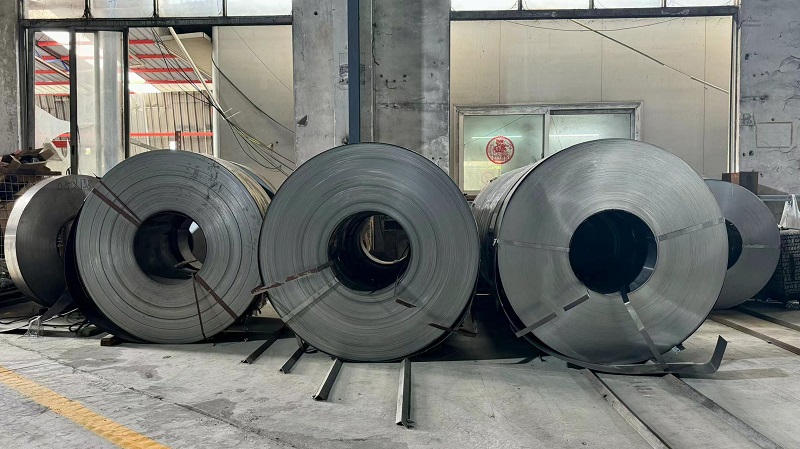
Step-by-step visibility of our high-capacity fabrication, assembly, and automated treatment operations.
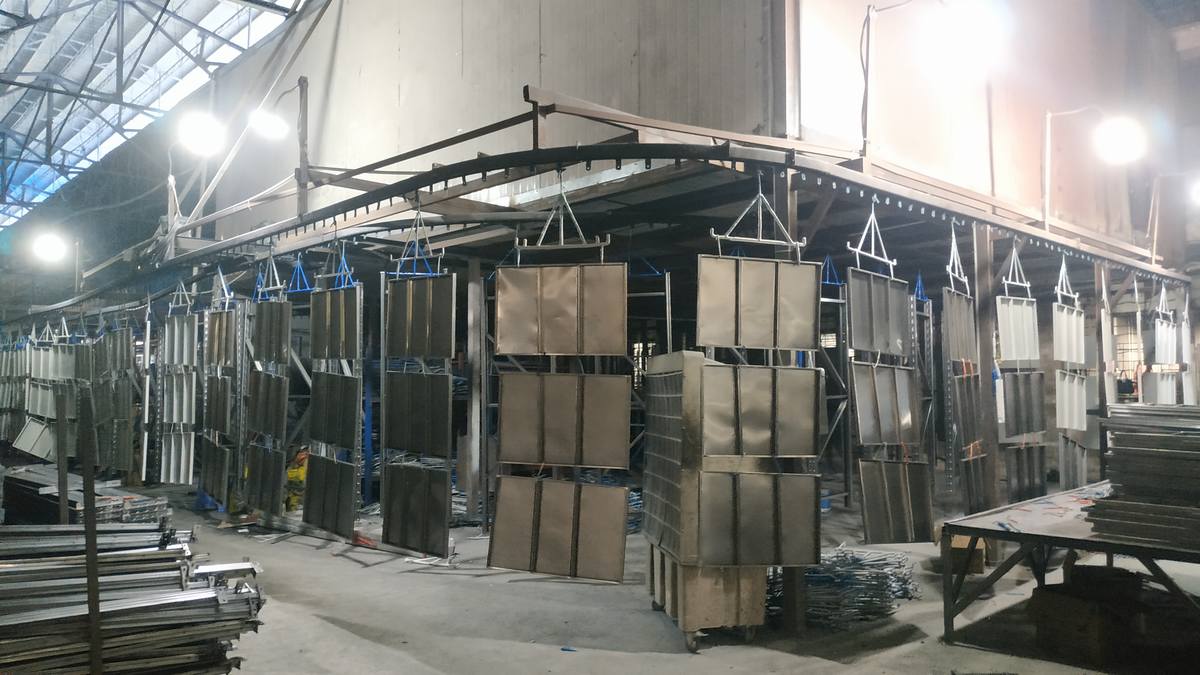
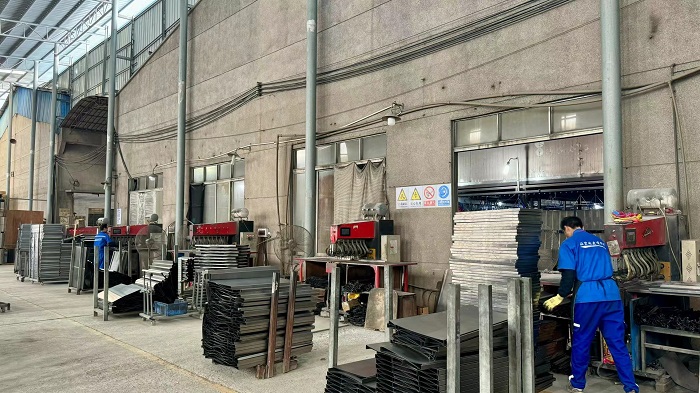
How different industrial environments require specific, custom material and engineering adjustments.
| Application Scenario | Technical Challenges | Optimal Racking Solution | Key Material Specifications |
|---|---|---|---|
| E-Commerce Logistics Hubs | Extremely high cycle rates; high SKU variety; intensive vertical space utilization. | Multi-tier mezzanine racks with integrated safety guardrails and drop gates. | Q355 steel decking, wear-resistant anti-slip surfaces, and modular boltless shelf layouts. |
| Heavy Manufacturing Facilities | Extreme weight concentrations; exposure to vibration and mechanical stress from forklift operations. | Heavy-duty structural pallet racks with upright protectors and support bars. | Double-welded box-beam configurations with a load capacity of up to 5,000 kg per layer. |
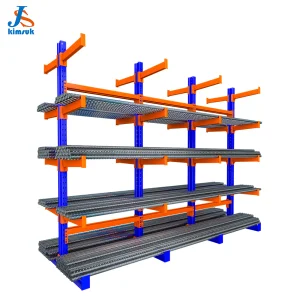
| Textile & Roll Storage | Oversized, cylindrical materials that roll easily, presenting safety hazards. | Industrial cantilever racks configured with pipe stops and adjustable arms. | Galvanized or painted steel cantilever arms featuring adjustable angle pins. |
| Retail Back-of-House | Variable product sizes; manual hand-loading; public safety compliance. | Lightweight to medium-duty boltless steel shelving units. | Cold-rolled steel frames with corrosion-resistant powder coatings. |
Expert answers to common engineering, safety, and logistical questions about industrial shelving and mezzanine systems.
Engineered to support heavy unit loads and specialized storage configurations.
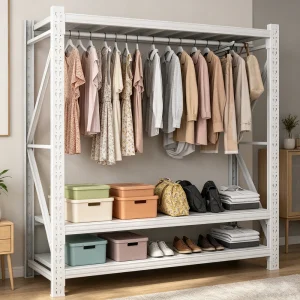


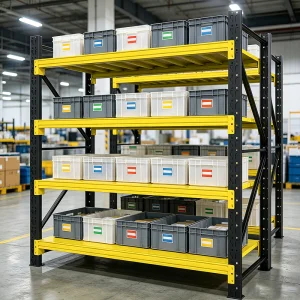


 Kimsuk Rack