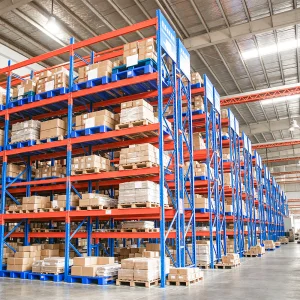
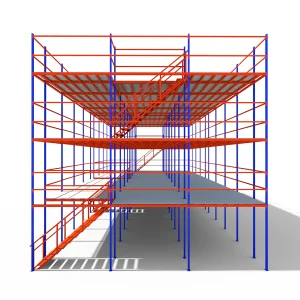
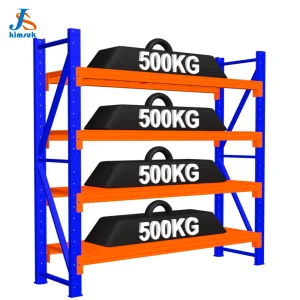
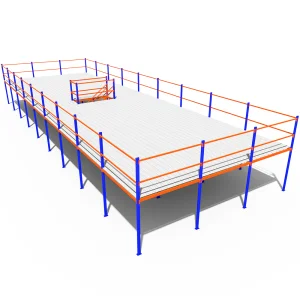
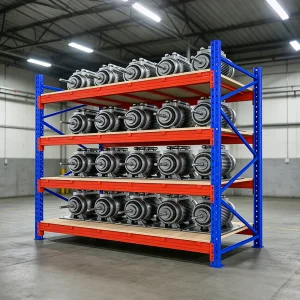
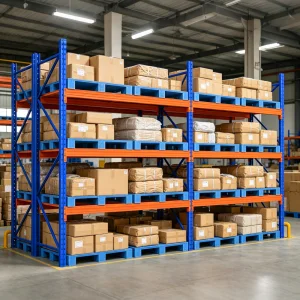
As global supply chains tighten, maximizing warehouse floor space is no longer just an operational goal—it is a critical competitive dynamic. High-density push-back storage racking systems represent a premier technical compromise between density and accessibility, utilizing nested cart systems on a sloped track geometry.
The global materials handling market is witnessing an unprecedented transition from standard selective storage systems to semi-automated and structural high-density setups. Among these, Push-Back Storage Racking stands out as the ultimate dynamic warehouse configuration. Built on a Last-In, First-Out (LIFO) material management process, push-back racking stores pallets nested 2 to 6 deep on rolling carts, riding on inclined structural steel tracks.
Unlike static drive-in rack structures, push-back storage minimizes warehouse damage caused by lift trucks because the forklifts never enter the racking matrix. This drastically lowers maintenance overhead and improves operational safety metrics across high-throughput distribution hubs. Globally, the rise of cold-chain supply loops, rapid e-commerce hubs, and chemical storage facilities has catalyzed the demand for configurations that conserve precious real estate. Estimates indicate that replacing traditional selective racks with dynamic push-back systems can boost volumetric storage capacity by up to 75% while simultaneously cutting cycle times.
Rising real estate development fees and land scarcity in municipal hubs across North America and Europe are steering operations managers toward high-density systems. Warehouse systems are no longer measured simply by cost-per-pallet position; instead, metrics like Cost-per-Square-Meter Efficiency and Energy-Saving Factors in temperature-controlled spaces have taken precedence.
Push-back racking bridges the gap between high-volume, low-density selective layouts and capital-intensive Automated Storage and Retrieval Systems (AS/RS). By enabling faster loading cycles (since forklifts only address the front lane face) and maximizing vertical space, these systems represent a robust investment model with quick payback horizons—often under 18 months.
An optimized push-back system relies on strict physical and mechanical specifications. The structural profile must manage dynamic forces when multi-ton pallets slide along inclined rails.
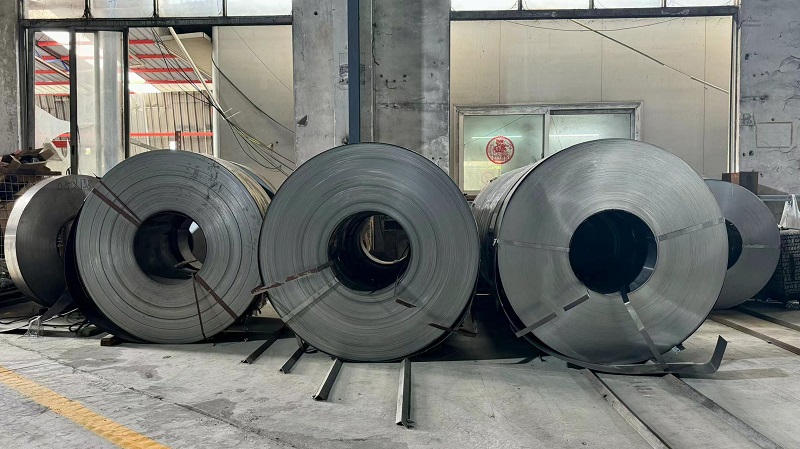
All critical columns and support uprights use structural steel (ASTM A572 Grade 50 / Q355B equivalent). This structural design prevents material fatigue under high cyclic loads and guarantees resistance to accidental impacts.
The rail assemblies are inclined at a calibrated slope (typically 3% to 4%). This guarantees reliable gravity flow when releasing pallets, while preventing unsafe velocities that could cause product shifts or column strikes.
A low-profile nested cart design maximizes vertical clear space. Specially designed safety catches and anti-derailment flanges prevent carts from binding or jumping their tracks during uneven forklift operations.
To maintain strict compliance with the Rack Manufacturers Institute (RMI) standards and EN 15512 specifications, manufacturers must execute regular load testing. At Kimsuk, our 18 structural engineers execute seismic assessments using localized soil profile simulations to model load limits. These structures are detailed below:
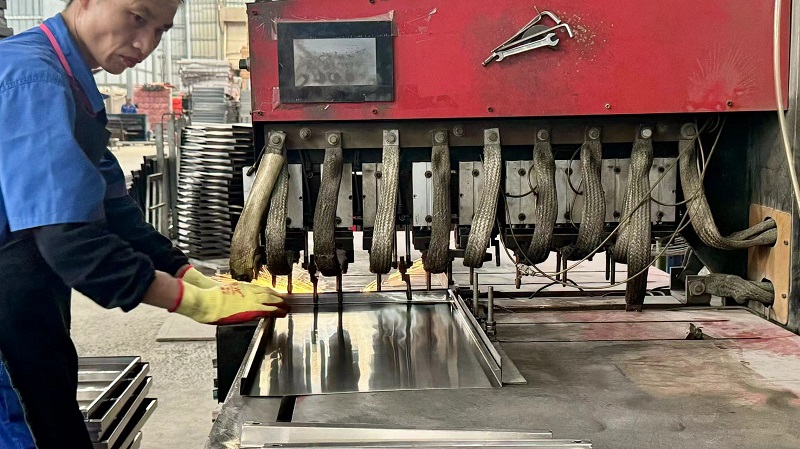
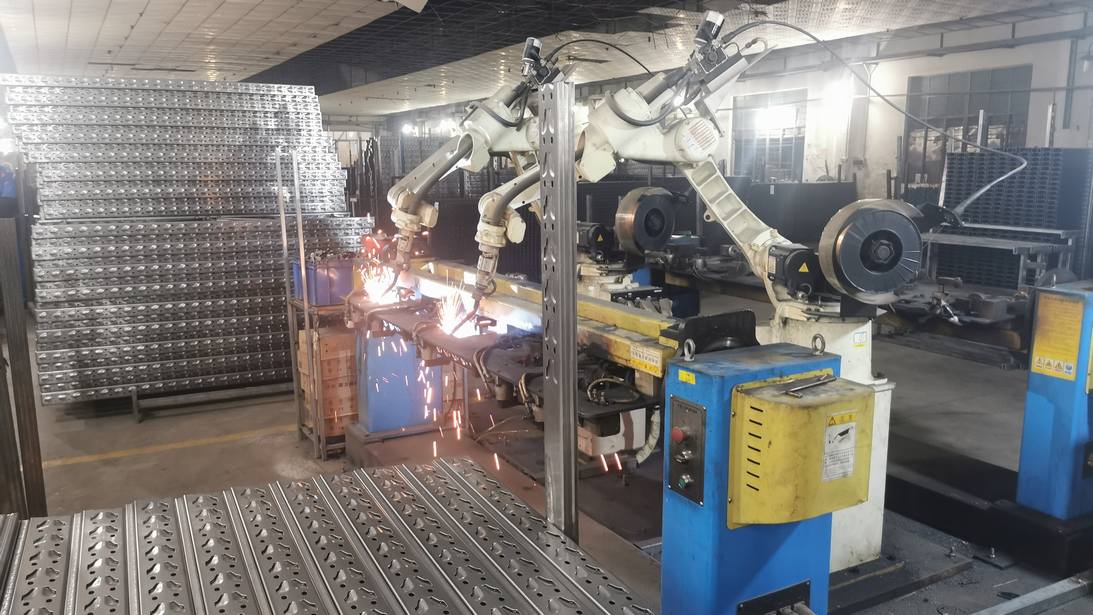
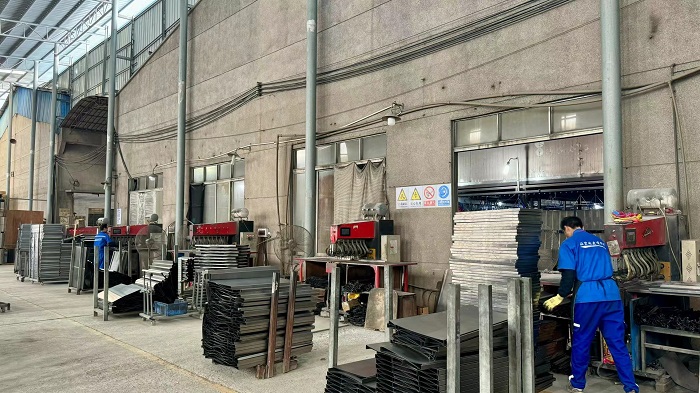
Established in 2015, Shenzhen Kimsuk Storage Equipment Manufacturing Co., Ltd. has grown to become a leading industrial warehouse storage systems manufacturer headquartered in Shenzhen, China. Operating from a modern, state-of-the-art 38,000 m² production facility, Kimsuk specializes in engineering advanced high-density pallet racking, mezzanine systems, and tailored logistics storage solutions for complex operations worldwide.
Leveraging 11 years of deep industry expertise and 8 years of direct international trade experience, Kimsuk generates over $22 million in annual export sales. Our primary overseas markets cover North America, Western Europe, Southeast Asia, and the Middle East, serving heavy-duty distributors, logistics hubs, e-commerce fulfillment centers, and industrial manufacturing plants.
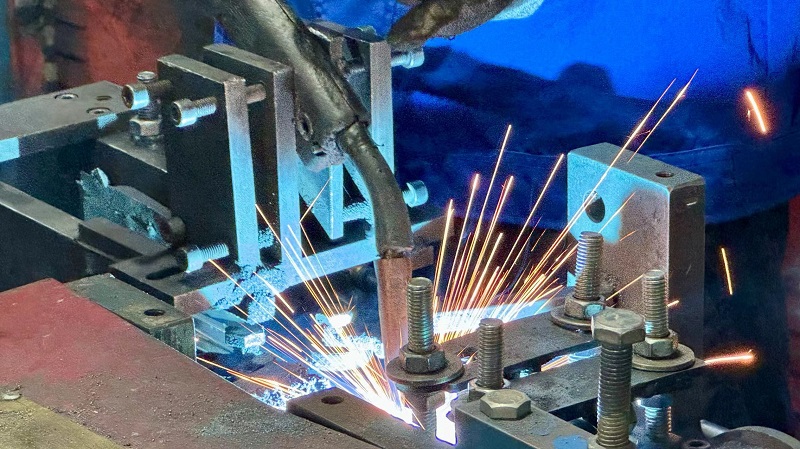
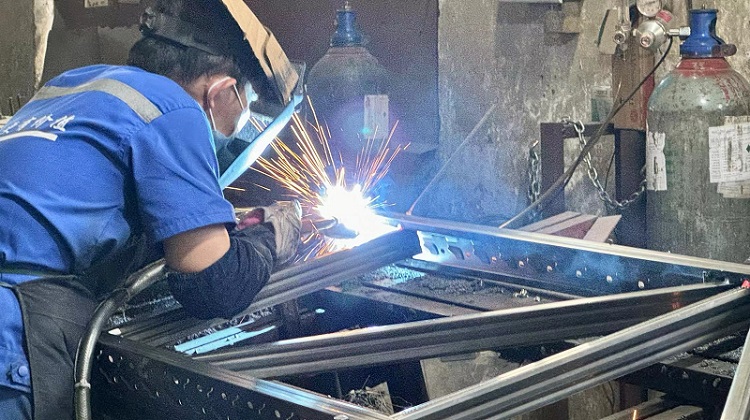
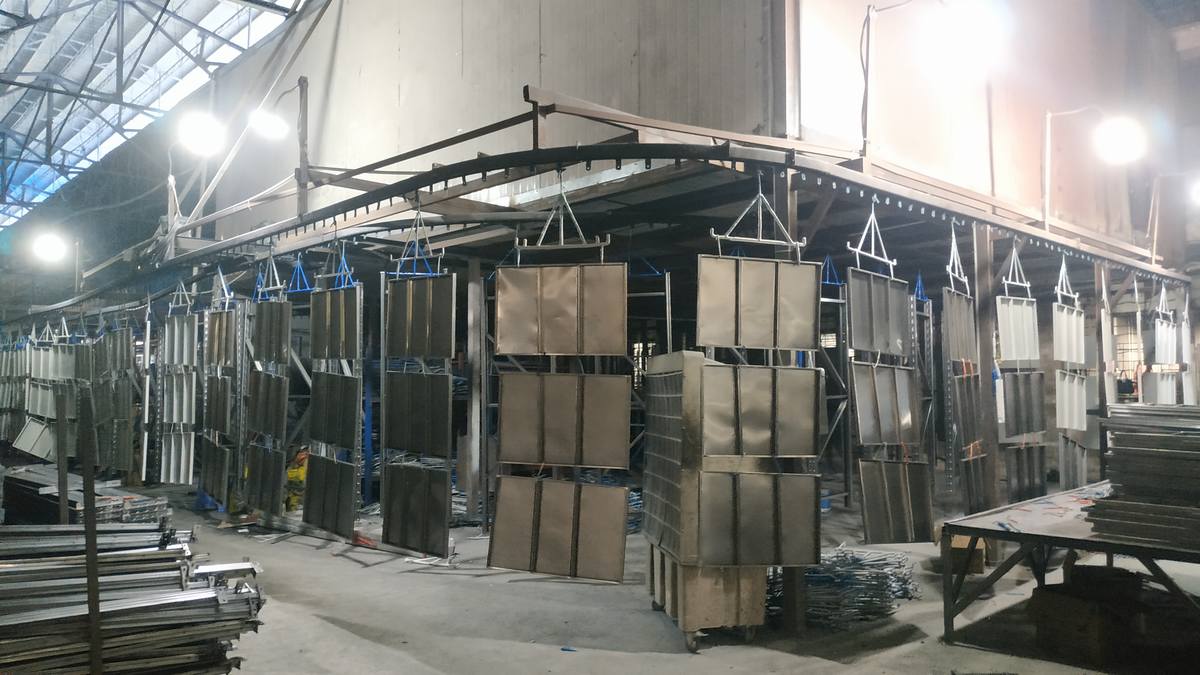
Quality and safety form the backbone of our manufacturing process. Directed by 35 dedicated full-time QC specialists, Kimsuk enforces rigorous testing protocols across all production phases—including spectral raw material testing, ultrasonic weld inspection, dynamic load capacity testing, and automated powder-coating durability checks.
Driven by continuous engineering innovation, our internal R&D team consists of 18 experienced structural engineers. Last year alone, we successfully launched 45 new optimized racking designs. We offer extensive OEM/ODM customization options, including tailored load capacities, specific column profiles, seismic-resistant structures, and custom anti-corrosion surface treatments. Supported by an integrated network of over 850 reliable supply chain partners, Shenzhen Kimsuk delivers high-performance, cost-effective warehouse storage systems engineered to maximize your space utilization.
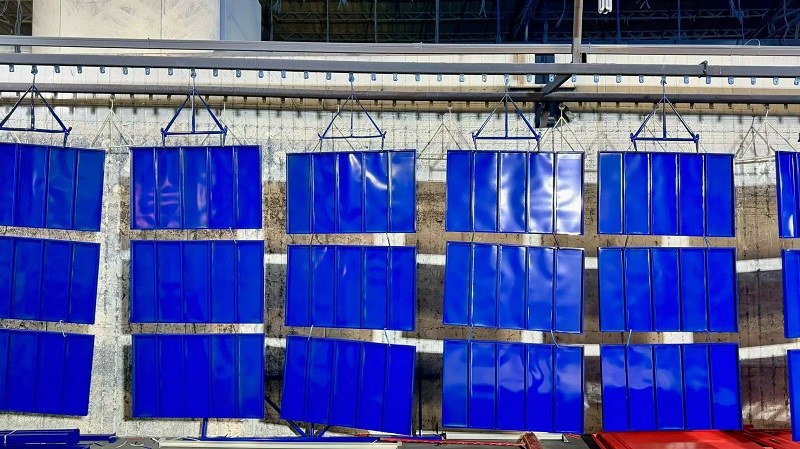
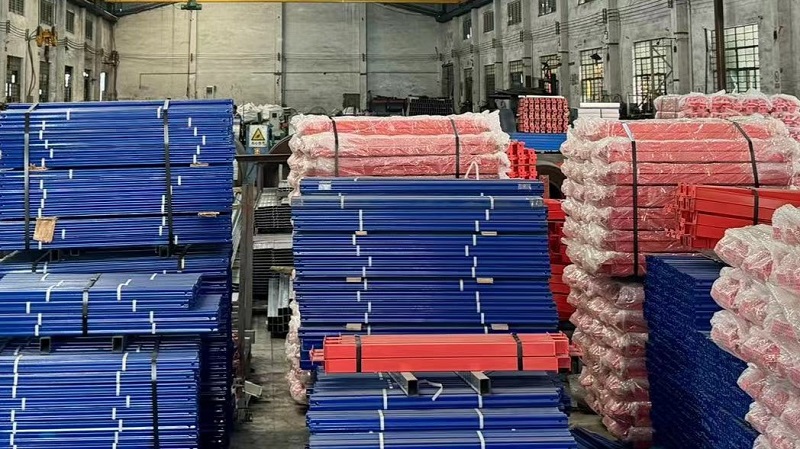
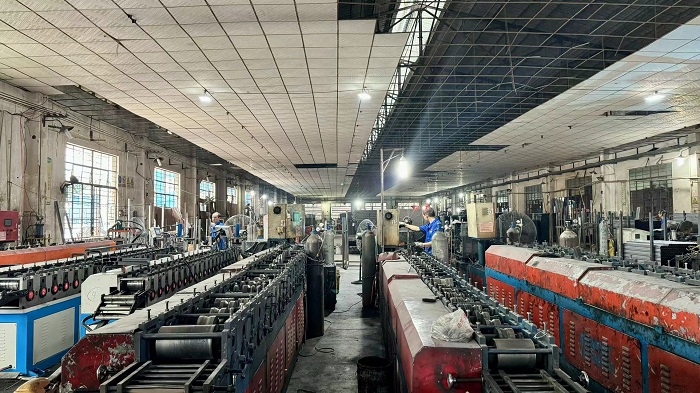
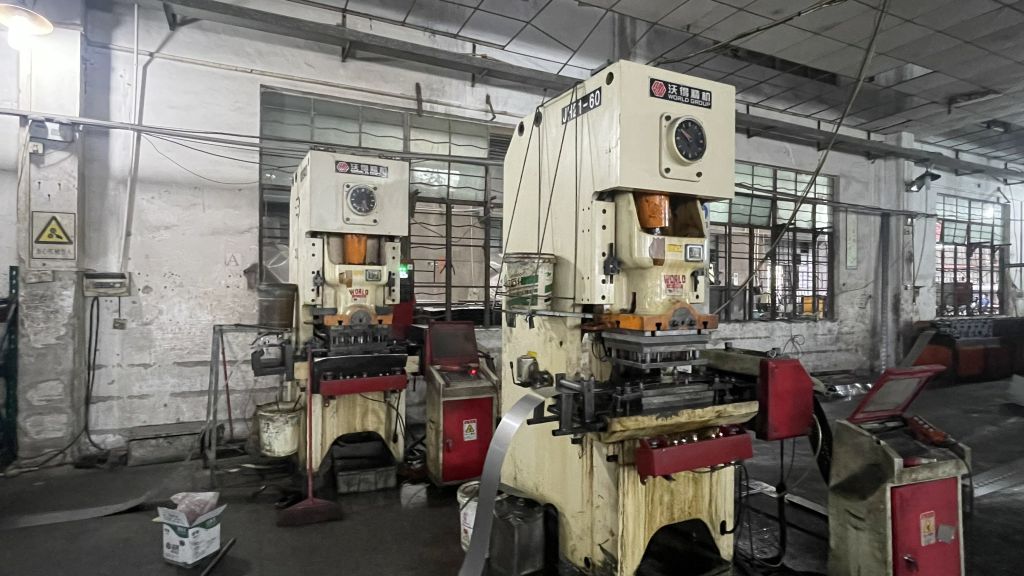
Push-back racking is uniquely suited for warehouses with high SKU diversity and mid-range turnover speed. Below are localized industrial deployment scenarios where push-back systems provide clear operational benefits:
Cold storage facilities incur massive HVAC operational expenses. Maintaining temperatures down to -30°C requires compact volumetric layout models. A 4-deep or 5-deep push-back system significantly cuts down aisle requirements, condensing cold air dispersion and driving down energy usage per pallet position by up to 35%.
With high SKU volumes, FMCG manufacturers need rapid, clean access to individual storage rows. While standard drive-in systems limit access to single product lines across entire bays, push-back racking offers dynamic access to different SKUs at every storage tier, boosting overall picking efficiency.
In manufacturing supply yards, heavy tooling sets and production raw materials require robust storage solutions. Our custom high-tensile steel push-back options easily accommodate pallet loads from 1,000kg to over 3,000kg per position. Custom shock-absorbers and heavy-duty structural steel channel profiles protect against high impact from large, heavily loaded forklifts.
The future of warehouse design lies in integration. Our engineering team at Kimsuk is actively developing hybrid configurations that bridge dynamic storage and IoT tracking.
Integrating load cells and wireless telemetry on gravity carts to track real-time pallet occupancy and system load distributions.
Developing advanced chemical coatings for rails that maintain consistent friction parameters in sub-zero and humid tropical environments.
Optimizing the entry face and centering plates of our racking lines to seamlessly interface with modern Automated Guided Vehicles (AGVs).
 Kimsuk Rack