2026 Best Impact Racks for Global Buyers?

Time:2026-11-01 Author:Ethan
0%

Impact Racks matter wherever forklifts, pallet loads, and busy aisles meet. A bent upright can disrupt a shift, damage stored goods, and create a hazard that is easy to overlook. For global buyers, choosing protection is not just a question of steel thickness. It means checking rack compatibility, anchoring, aisle clearance, corrosion exposure, and replacement-part availability.

Industry investment points to changing warehouse needs. MHI’s 2024 Annual Industry Report found that 55% of surveyed supply-chain professionals planned to increase investment in supply-chain technology over the following two years. More automation can bring tighter operating spaces and different traffic patterns. It does not, by itself, make a rack safer. A guard that blocks a forklift path or does not fit the installed upright may create new problems. Small details matter.

This guide compares impact rack options through practical buyer questions: What load and impact conditions are they designed for? Can installers verify the floor anchors and rack dimensions? Are product ratings supported by clear documentation? Standards such as ANSI MH16.1 address steel storage rack design, but buyers should confirm which requirements apply to their project and region. No single protector suits every warehouse. That is worth admitting. The strongest shortlist is built from site measurements, credible technical data, and a realistic plan for inspection and replacement—not from a product photo alone.
2026 Best Impact Racks for Global Buyers?

What Impact Racks Are and How They Protect Storage Systems

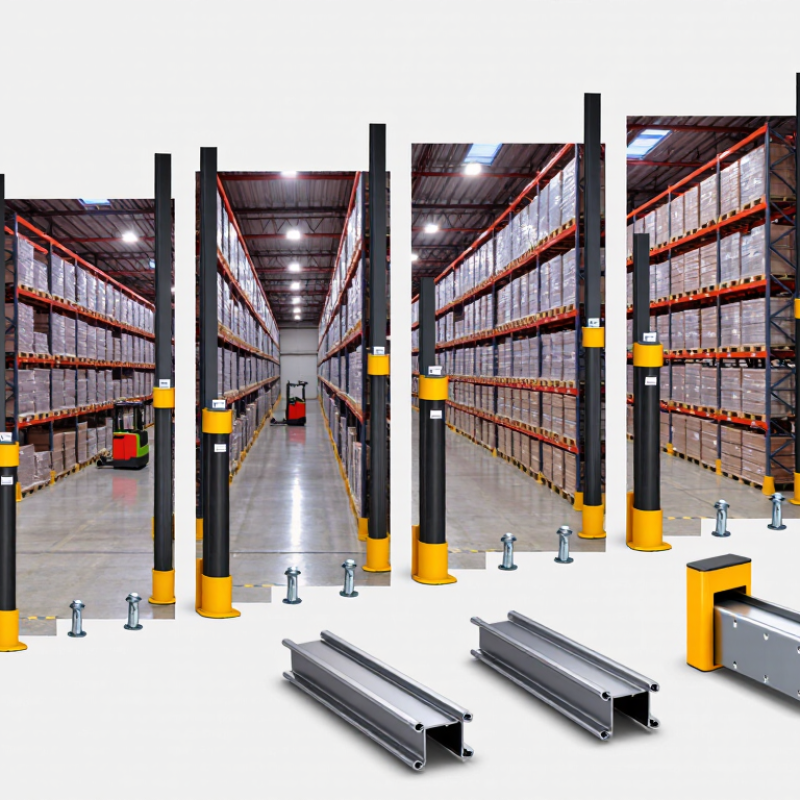
Impact racks are pallet storage systems designed to manage everyday contact from forklifts and other warehouse equipment. Their frames, beams, bracing, and protective components work together to keep loads supported. End-of-aisle guards and upright protectors can take the first blow. They help limit damage to vulnerable rack columns. Not invincible.

A forklift turning near a loaded bay may clip a lower upright. Without protection, the metal can bend, weakening the structure that carries pallets above. Guards fixed to the floor can reduce direct contact, while clear aisle markings help drivers judge turning space. Correct anchoring matters, too. A strong-looking rack can still be unsafe if its fixings are loose or unsuitable for the floor.

Protection depends on rack design, installation, load limits, and regular checks. Staff should inspect uprights, beams, anchors, and guards for dents, cracks, or movement. A guard can hide damage behind it, so check the rack itself after a collision. If a component looks bent, keep the affected bay out of use until a qualified professional assesses it. Impact protection reduces risk; it does not replace safe handling or inspection. Real warehouses are messy, and even a careful plan needs review when traffic patterns change.

2026 Best Impact Racks for Global Buyers: Pallet Footprints for Rack Protection Planning

The chart compares two standardized pallet footprints listed in ISO 6780. Pallet dimensions are useful layout inputs when planning rack clearances and positioning upright or aisle-end impact protection; they are not impact-resistance ratings.

Core Components, Materials, and Impact-Absorption Features

Impact protection begins at the points most exposed to moving loads: rack uprights, aisle ends, and corner posts. A practical system may combine upright guards, end barriers, reinforced base plates, and properly specified anchors. Each part has a different job. Guards shield steel columns from direct contact, while barriers can redirect pallet trucks before they reach a rack face. Fit matters more.

Steel guards offer rigid, durable protection, but they can transfer force into the floor or rack if poorly designed. Flexible polymer guards may deform and absorb some energy, then recover their shape. Performance varies with impact speed, temperature, material thickness, and installation. No protector is magic. Buyers should check the expected load, vehicle type, aisle width, and floor condition before choosing components. Anchors need sound concrete, and clearances must allow safe pallet placement. A common mistake is treating guards as a substitute for traffic planning. That assumption deserves a second look. Site trials can reveal awkward turning points or blocked sightlines that drawings miss. After installation, inspect for cracks, loose fixings, bent steel, and changes in guard position; even small shifts can leave an upright exposed.

How to Evaluate Impact Racks for Different Warehouse Environments

Impact racks should be evaluated against the warehouse’s real traffic, loads, and floor conditions—not just a product sheet. Record pallet weight, beam height, and the number of forklift movements near each aisle. Check where collisions are most likely: aisle ends, narrow turns, and staging areas. Small details matter. A cracked slab or uneven floor can affect anchoring and rack stability, so verify the surface before installation.

Temperature and moisture change the assessment. In cold storage, confirm that materials and finishes suit the operating temperature, and check for condensation around joints. In damp areas, inspect coatings and exposed connections for early corrosion.

Forklift type matters too. Measure turning space with the actual truck and pallet; a drawing can miss awkward approach angles. A rack that fits on paper may still leave too little clearance in daily use.

Review the site with operators and maintenance staff, then compare their observations with the rack layout and load data. Ask how damaged uprights are reported and inspected. Protection devices can reduce routine contact, but they do not make a damaged rack safe. The awkward part is incomplete information: older facilities may lack reliable impact records. Mark uncertain locations, monitor them, and reassess after traffic patterns change. One more measurement is often worth the delay.

Global Safety Standards and Compatibility Considerations for 2026

Global buyers should treat impact protection as part of a rack system, not a bolt-on purchase. ANSI MH16.1 addresses the design and testing of industrial steel storage racks, while EN 15512 covers adjustable pallet racking design in Europe. These standards are not interchangeable approvals. Check the rules adopted in the installation country, including seismic requirements and local inspection obligations.

Fit matters. Confirm upright dimensions, connector geometry, beam capacity, pallet overhang, and forklift clearance before choosing guards or replacement parts. A guard that blocks a connector or narrows an aisle can create a new hazard. The U.S. Bureau of Labor Statistics reported 4.8 recordable injury and illness cases per 100 full-time workers in warehousing and storage in 2022. That figure is a useful risk signal, not proof that rack impacts caused those cases. Still, it makes practical damage prevention hard to dismiss.

Ask suppliers for load ratings, installation instructions, and evidence that protection suits the rack profile and expected impact direction. EN 15635 guidance also emphasizes ongoing rack inspection and risk-based action after damage. Keep inspection records, photograph bent uprights, and isolate visibly damaged bays until a qualified person assesses them. Small details count. A site survey can expose mismatched frames, uneven floors, or turning paths that product sheets miss. Compatibility is easy to assume—and worth checking twice.

2026 Best Impact Racks for Global Buyers? — Global Safety Standards and Compatibility Considerations for 2026

Use this comparison to match rack protection and storage-system requirements to the site, handling equipment, loads, and local regulations. “Best fit” describes a typical application, not a universal product ranking.

Rack or protection option Typical application Relevant safety references Compatibility checks Buyer verification
Adjustable pallet racking with upright protection Pallet storage where lift trucks operate close to rack uprights, especially at aisle ends and exposed frame locations. EN 15512 addresses structural design of adjustable pallet racking; EN 15635 covers use and maintenance of storage equipment. In the United States, ANSI MH16.1 is a rack-design reference. Confirm protector attachment and clearance from the upright, base plate, anchors, and pallet positions. Check that protection does not reduce required aisle width or obstruct inspection. Obtain the rack load configuration and protection installation details. Confirm the rack system is assessed for the actual pallet loads, beam levels, and operating conditions.
End-of-aisle frame protection Exposed rack ends and aisle corners with frequent turning or reversing movements. EN 15635 provides guidance on safe use, inspection, and maintenance of storage equipment. Applicable local workplace and building requirements also apply. Check turning radius, truck and load overhang, pedestrian routes, fire equipment access, and the position of the first rack upright. Protection should not create a new trip or collision hazard. Review the aisle layout with the actual truck dimensions and operating paths. Verify that the guard is anchored to a suitable floor and does not transfer damaging loads to the rack.
Floor-mounted barrier rail Separating vehicle routes from rack rows, work areas, or pedestrian walkways where a continuous barrier is needed. OSHA 29 CFR 1910.176(b) requires stored materials not to create hazards and to be secured against sliding or collapse; it is not a rack-design or impact-rating standard. Local traffic-separation rules may also apply. Check barrier height and layout against vehicle type, load dimensions, floor condition, doors, exits, and access to rack bays. Keep the barrier independent of rack frames unless the system is specifically engineered otherwise. Request documented impact-performance information for the intended vehicle and use conditions. Confirm anchorage, slab suitability, and inspection requirements with a qualified designer.
Column or building-support guard Protecting building columns and other vulnerable fixed structures along forklift routes. Applicable building codes and local occupational-safety requirements govern the surrounding installation. Rack standards do not automatically establish a building-column guard’s impact capacity. Confirm the guard fits the column without damaging finishes or interfering with fire protection, services, exits, or required clearances. Distinguish building-column protection from rack-upright protection. Verify the protected structure, guard anchorage, and floor capacity. Seek engineering review where a collision could affect structural stability or critical services.
Seismic-rated adjustable pallet racking Pallet storage in locations where seismic design is required by the governing building code or site risk assessment. EN 16681 covers seismic design principles for adjustable pallet racking. Seismic design in other regions is governed by local building codes and adopted standards, such as the applicable edition of ASCE 7 in the United States. Confirm the site’s seismic parameters, soil and building conditions, rack height, stored-load arrangement, anchorage, and any interaction with impact guards or adjacent structures. Request project-specific calculations and approved installation details. Do not assume a standard rack configuration or an impact protector is suitable for seismic conditions without review.
Racking specified for local regional requirements Projects requiring documented conformity with the country or jurisdiction where the system will be installed and operated. Relevant references include EN 15629 for storage-equipment specification, EN 15620 for tolerances, deformations, and clearances, and AS 4084 for steel storage racking in Australia. National adoption and applicable editions vary. Check whether the specification addresses the rack, floor, installation tolerances, handling equipment, protection devices, and operating conditions—not just one component. Ask the supplier and project engineer to identify the exact standard editions, local code requirements, design assumptions, and inspection arrangements applicable to the site.
Rack inspection and damage-management program All operational rack installations, particularly facilities with regular lift-truck traffic or a history of impacts. EN 15635 addresses use and maintenance of storage equipment, including inspection and action following damage. Local regulations may impose additional duties. Set inspection responsibilities and reporting routes. Keep damaged areas controlled, and assess impacts on uprights, bracing, beams, connections, anchors, and nearby loads. Maintain current rack-layout and load information, inspection records, and repair approvals. Have damage assessed by a competent person under the applicable site procedure.

Important: Standards and code editions can differ by country and may be amended or adopted locally. No single standard gives every impact protector a universal performance rating. Confirm current local requirements, product documentation, floor and anchorage conditions, and project-specific design with qualified professionals before purchase or installation.

How to Select and Maintain Impact Racks for Long-Term Use

Select impact racks by the load, not the aisle’s appearance. Confirm pallet weight, beam span, lift-truck clearance, floor capacity, and local seismic demands with a qualified rack designer. The Rack Manufacturers Institute’s ANSI MH16.1 standard provides design requirements for industrial steel storage racks. Specify rated load signs and upright guards where trucks turn or reverse. A guard helps, but it does not make a damaged frame safe.

Maintenance starts with visible checks. Look for bent uprights, twisted beams, loose anchors, missing locking pins, and pallets leaning beyond the beam edge. OSHA estimates powered industrial trucks cause about 85 workplace deaths and 34,900 serious injuries annually; its guidance underscores the need to control truck and storage hazards. Record damage by location, unload affected bays when needed, and have repairs assessed by a competent person. A small dent can be hard to judge from the aisle. Don’t guess.

Tips: Keep a simple inspection log, photograph damage, and recheck high-traffic corners weekly. Arrange a documented expert inspection at least annually, following EN 15635 guidance. Replace damaged parts only with compatible components, then verify the rack’s load rating before use.

FAQS

Which rack areas need impact protection most?

Protect uprights, aisle ends, and corner posts. These areas face moving loads directly.

What parts can a protection system include?

It may include upright guards, end barriers, reinforced base plates, and suitable anchors. Each part has a different job.

Are steel or polymer guards better?

Steel guards are rigid and durable. Polymer guards may deform and recover. Performance depends on impact speed, temperature, and material thickness.

What should buyers check before choosing guards?

Check vehicle type, expected loads, aisle width, and floor condition. Fit matters. A poor match can create new hazards.

Can guards replace careful traffic planning?

No. Guards do not solve awkward turning paths or blocked sightlines. Site trials may reveal problems drawings miss.

How can teams confirm compatibility with existing racks?

Check upright dimensions, connector shapes, beam capacity, pallet overhang, and forklift clearance. I would check twice.

What should workers inspect after installation?

Look for cracks, loose fixings, bent steel, and shifted guards. Small shifts matter.

What should happen when a rack bay looks damaged?

Photograph bent uprights and isolate visibly damaged bays. Have a qualified person assess them before use.

Why keep inspection records?

Records help track damage and follow up on repairs. They also show where problems repeat. A useful habit.

Conclusion

This guide explains how Impact Racks help protect warehouse storage systems by absorbing or deflecting collisions from forklifts and other moving equipment. It outlines common components, materials, and impact-absorption features, while showing how rack design and protective capacity can affect the safety and durability of stored goods and equipment.

For global buyers in 2026, the guide also covers how to assess impact protection for different warehouse layouts, traffic levels, and operating conditions. It highlights the importance of checking applicable safety standards, dimensions, load requirements, and compatibility with existing storage systems. Practical selection and maintenance advice helps buyers compare options, inspect racks for damage, and support reliable long-term use.

Ethan

Ethan

Ethan is a seasoned marketing professional with a deep expertise in our company's innovative product line. With a passion for sharing knowledge and insights, he takes the lead in regularly updating our corporate blog, where he explores industry trends, product features, and effective marketing......